
SEO vs PPC: Which Is Better for Small Businesses?
For large brands, the question of SEO vs PPC never arises. There is no need to compare the two, as large brands can afford to remain heavily invested in both. Whether it’s a question of time or money, digital marketers working for large brands are willing to spend both to get the best results.
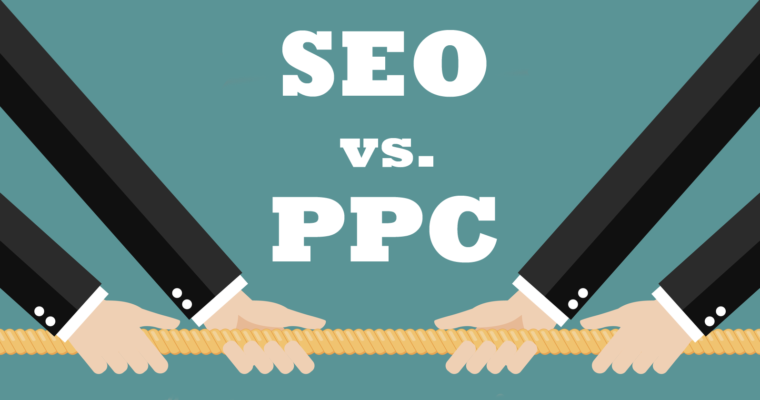
Small brands, on the other hand, do think about SEO and PPC. While they may be fundamentally similar at the foundation level, SEO deals with organic visibility, while PPC provides brands with instant paid presence across different channels, search engines being one of them.
It is thus imperative for small businesses to allocate their smaller resources carefully. Spending all time and energy on SEO may seem tempting, but the advantages of PPC are not worth ignoring either.
A balanced approach is adopted most of the time, although the results gained from such a tactic are often underwhelming and middling.
The answer to SEO vs PPC is not unanimous, especially on an objective level. Both have their own merits and have the ability to carry an entire campaign on their own.
In this article, we discuss the different situations in which either SEO or PPC are good options to choose from.
Note:
Choosing between SEO and PPC depends largely on business goals, timelines, and budget constraints rather than a one-size-fits-all rule.
Long-Term Business Growth: SEO Is the Answer
A small business cannot keep pumping money into paid PPC campaigns forever. An organic source to bring in necessary traffic is the only long-term solution for a small business, or ideally, any business for that matter.
SEO is the only digital marketing technique that can ensure streams of traffic coming into a website organically over a long period of time. Almost any small business is likely invested in ensuring a long-term future for its marketing efforts, thus making SEO an irreplaceable part of any digital marketing campaign.
Case Study
A small service-based company focused on SEO-driven content and keyword optimization. Over time, organic traffic increased steadily, reducing dependence on paid advertising and creating consistent lead generation.
Short-Term Boost: PPC Campaigns Provide a Shot of Life
Every business needs a lift at times. SEO is a long-term measure, but traffic levels can drop due to minor obstacles such as a decline in rankings for a particular keyword.
PPC campaigns can provide an immediate injection of traffic to a small business during such periods. For businesses that generate sales and revenue primarily through website visitors, PPC campaigns can be especially helpful.
Small businesses should consider PPC as a tactical weapon used during crucial moments rather than a long-term power source for campaigns. Sinking money into PPC without any SEO efforts in the background is ineffective, as traffic will drop once the ad budget runs out. Thus, small businesses must be smart and use PPC effectively and efficiently.
Note:
PPC works best when supported by strong SEO foundations, ensuring continuity once paid campaigns end.
Case Study
An online retailer launched a short PPC campaign during a seasonal slowdown. The campaign revived traffic and sales while ongoing SEO efforts ensured sustained performance after the ads were paused.
Conclusion
SEO and PPC serve different purposes and perform best in different situations. SEO is essential for long-term growth and stability, while PPC is valuable for immediate visibility and traffic boosts. Small businesses that understand when and how to use each strategy can build more resilient and effective digital marketing campaigns.
Related Posts:


IIFRA is a leading skill-development institute in India, specializing in Digital Marketing, Cyber Security, Ethical Hacking, Business Analytics, and other future-ready programs. With a strong focus on practical training, industry-aligned curriculum, and career-oriented learning, IIFRA empowers students and professionals to build successful careers in the digital and technology-driven world.