
Mobile Marketing Trends Shaping the Future of Digital Marketing
The rise of mobile marketing has been in the making ever since mobile phones became a necessity for individuals across the world. Today, we live our lives constantly engaged with mobile phones. In many ways, mobile phones have become an extension of our personality.
Our mobile phone is almost like a portable organ of our body—one without which living may not be impossible, but certainly very difficult.
This article is devoted to the topic of mobile marketing trends, which is an interesting field in itself. The dynamic nature of digital marketing is clearly reflected in its subset, mobile marketing.
With constant app updates and new services being rolled out by brands through mobile-friendly websites and native apps, mobile phones have become hubs of continuous technological improvement and enhanced user experience. Numerous mobile trends emerge and fade almost every week, making it difficult to track the rapidly evolving mobile marketing landscape.
As a discipline, mobile marketing is a core part of digital marketing education. From learning modules to full-fledged digital marketing courses, mobile marketing is commonly taught across training institutes.
In this article, we will discuss some important mobile marketing trends and the impact they are likely to have on the field.
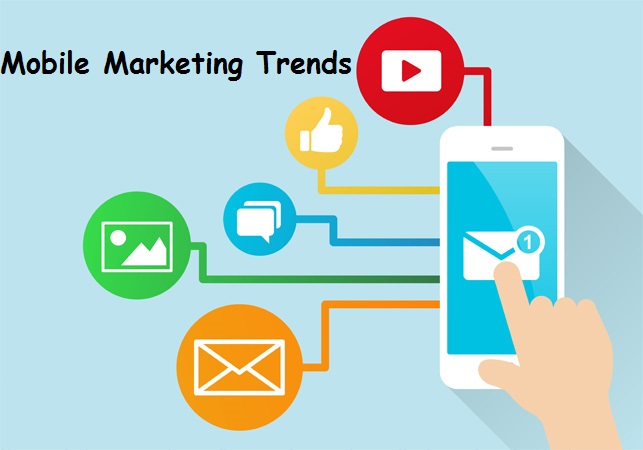
Note:
Mobile marketing trends evolve faster than most digital channels due to rapid innovation in mobile devices and user behavior.
Audio Search and Navigation in Mobile Marketing
Audio technology is not a new invention. Search engines like Google have been experimenting with audio search across platforms such as Google Search and YouTube for years.
The reason audio is considered a new mobile marketing trend is that its acceptance among the general audience has increased only recently. Devices such as Alexa and platforms like Siri and Cortana have gained popularity due to widespread adoption of audio search and navigation among mobile users.
The impact of this trend is far-reaching. Beyond websites adapting to audio search and navigation, keyword research itself is expected to evolve as audio queries tend to be longer and more conversational.
Case Study
A local business optimized its website content for conversational keywords after noticing increased voice-based search traffic. This resulted in improved visibility for voice search queries and higher mobile engagement.
Augmented Reality (AR) in Mobile Marketing
Augmented Reality (AR) is one of the most frequently discussed mobile marketing buzzwords. In simple terms, AR-integrated mobile applications bridge the gap between the real world and mobile devices.
Applications like Google Pixel showcase the potential of AR by blending real-world visuals with digital enhancements. As technology continues to advance, AR is expected to become increasingly common and seamlessly integrated into daily life, marking another major technological leap in a short span of time.
Note:
AR experiences enhance user engagement by allowing consumers to interact with products and environments virtually before making decisions.
Cyber Security and Privacy in Mobile Ecosystems
Recent scandals involving major social media platforms have made users more conscious of privacy in the digital landscape.
This growing awareness around personal data protection is expected to intensify. Mobile apps and services that offer stronger privacy controls, anonymity, and protection from large tech platforms and hackers are likely to gain popularity.
The implications of this trend are significant, especially as future technologies become more intrusive. Cyber security and privacy will remain key considerations in mobile marketing strategies.
Case Study
A privacy-focused mobile app gained rapid adoption after emphasizing data security and transparency in its messaging, proving that trust has become a key differentiator in mobile marketing.
Conclusion
Mobile marketing continues to evolve at a rapid pace, driven by changing consumer behavior and technological advancements. Trends such as audio search, augmented reality, and heightened focus on privacy are shaping the future of mobile marketing. Digital marketers who stay informed and adaptable will be better positioned to leverage these trends for long-term success.

IIFRA is a leading skill-development institute in India, specializing in Digital Marketing, Cyber Security, Ethical Hacking, Business Analytics, and other future-ready programs. With a strong focus on practical training, industry-aligned curriculum, and career-oriented learning, IIFRA empowers students and professionals to build successful careers in the digital and technology-driven world.